Ask five different vendors what hospital software costs, and you will likely get five different answers, none of which fully explain how they arrived at that number. This is one of the most common frustrations hospital administrators run into during their search, vague ranges, hidden add ons, and pricing pages that raise more questions than they answer.
The truth is that hospital software pricing genuinely does vary, sometimes significantly, and understanding why makes it much easier to evaluate whether a quote you receive is reasonable or inflated.
Why There Is No Single Fixed Price
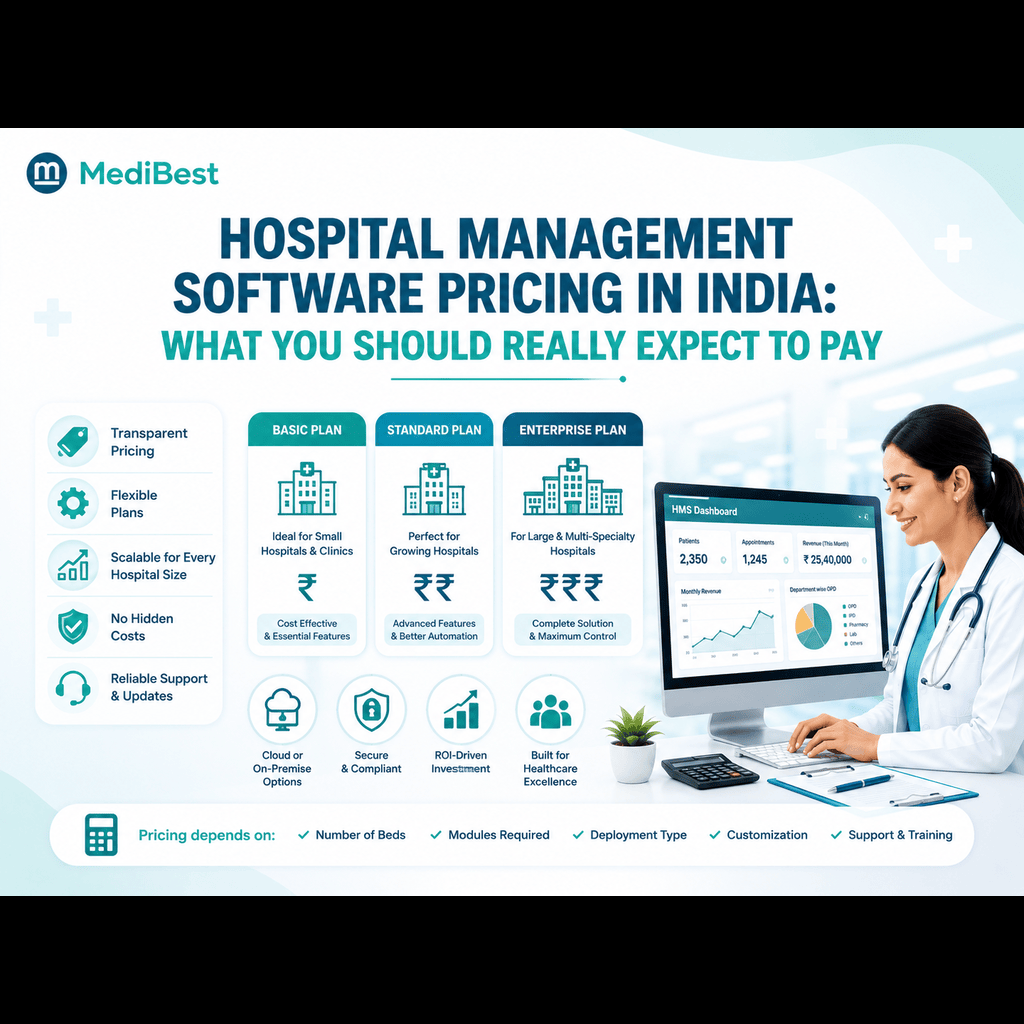
Unlike simpler business tools, hospital software pricing depends on several factors specific to each facility. A ten bed clinic and a three hundred bed multi specialty hospital are not comparable purchases, even though both technically fall under the same broad category of software.
The main factors that influence cost include:
- Number of beds and daily patient volume
- Number of departments requiring integration, such as pharmacy, lab, and radiology
- Deployment model, whether cloud based or on premise
- Number of staff accounts and concurrent users
- Level of customisation required for specific hospital workflows
- Ongoing support and maintenance terms included in the package
This is exactly why a single quoted number rarely tells the full story until these variables are factored in.
What Typically Drives Hospital Management Software Price
When hospitals request quotes, the hospital management software price they receive is usually built from a combination of a base platform fee and additional charges for specific modules or user accounts. Some vendors bundle everything into one package, while others charge separately for features like billing, inventory, or patient engagement tools.
It helps to ask vendors directly what is included in the base price versus what counts as an add on, since this is often where quotes that initially look affordable end up costing significantly more once a hospital actually implements the full system it needs.
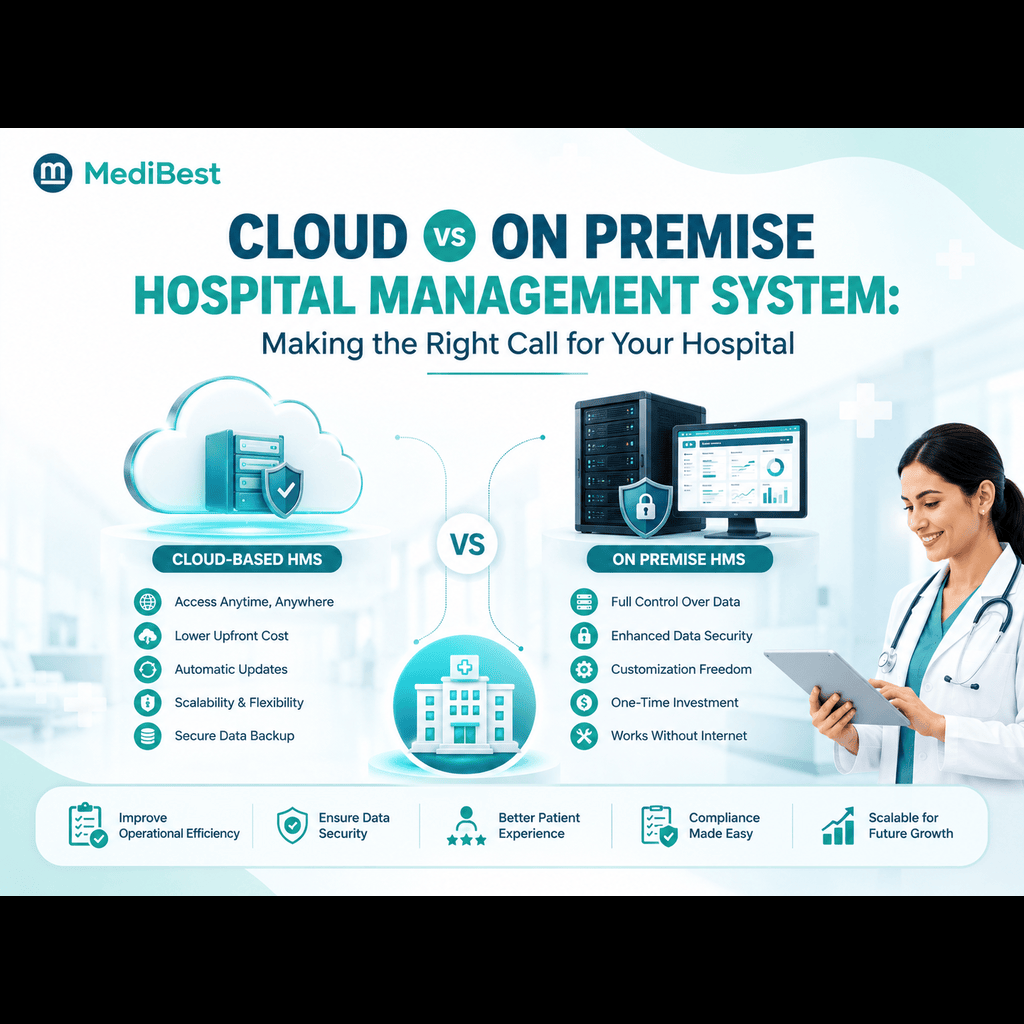
Comparing Cloud and On Premise Costs
The deployment model has a major impact on overall hospital software price, and this is worth understanding clearly before comparing vendors.
On premise systems typically involve a higher upfront cost, since hospitals need to purchase and maintain physical servers alongside the software itself. Cloud based systems generally follow a subscription model, spreading cost over time rather than requiring a large initial investment, which tends to be easier for hospitals to budget for, particularly smaller facilities or those just beginning their digital transformation.
Neither model is inherently cheaper overall, the total cost depends heavily on how long the hospital plans to use the system and how its patient volume is expected to grow.
What to Look For Beyond the Price Tag
Choosing based on price alone often leads to disappointment later, particularly if a lower cost option lacks proper implementation support or struggles to scale as the hospital grows.
When evaluating the best hospital management software for your facility, consider these factors alongside pricing:
- Quality and responsiveness of implementation support
- Whether staff training is included or charged separately
- How easily the system integrates with existing lab, pharmacy, or billing tools
- Long term scalability as patient volumes increase
- Clarity of the contract regarding renewal costs and future price increases
A slightly higher upfront cost with strong implementation support and transparent long term pricing is often a better investment than a cheaper option that leads to unexpected expenses down the line.
A Realistic Way to Approach Vendor Quotes
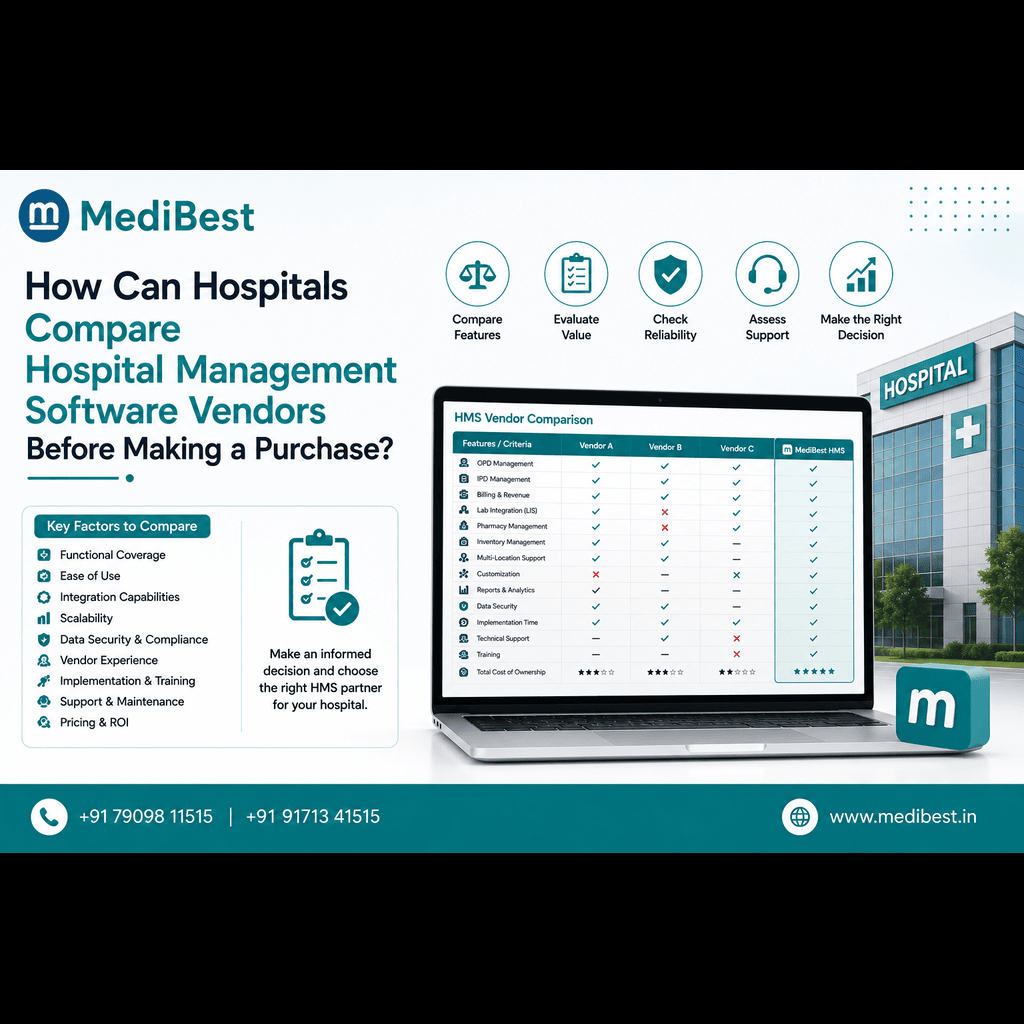
Rather than comparing headline numbers across vendors, it helps to request a detailed breakdown covering the base platform cost, any per user or per department charges, implementation and training fees, and ongoing annual maintenance costs. This makes it far easier to compare quotes on an equal footing, rather than being misled by a low starting figure that expands significantly once the full requirement is priced in.
Medibest approaches pricing conversations by first understanding a hospital’s actual operational needs, bed count, department structure, and growth plans, before quoting a number, since a generic price without that context rarely reflects what a hospital will actually end up paying.
If you are still weighing whether the investment makes sense for your facility at all, our earlier piece on why you should invest in a hospital management system covers the broader return hospitals typically see beyond the upfront cost.
Frequently Asked Questions
1. How much does hospital management software typically cost in India?
Pricing varies widely based on hospital size, deployment model, and required modules, ranging from more affordable packages for small clinics to significantly higher investments for large multi specialty hospitals with extensive integration needs.
2. Is cloud based hospital software cheaper than on premise?
Cloud based systems usually involve lower upfront costs since there is no need to purchase physical servers, while on premise systems require higher initial investment but may have lower long term subscription costs, depending on the vendor.
3. What hidden costs should hospitals watch for when comparing quotes?
Common hidden costs include per user charges, module add ons not included in the base price, implementation and training fees, and annual maintenance or support charges that are sometimes quoted separately from the main platform cost.
4. Does a higher price always mean better hospital software?
Not necessarily. Price should be evaluated alongside implementation support, scalability, and how well the system fits the hospital’s actual workflow, rather than treated as the only indicator of quality.
5. Can hospital software pricing change after implementation?
Yes, particularly with subscription based models where renewal costs or additional user licenses can increase over time. It is worth reviewing the contract terms closely before signing to understand how future pricing works.
Ready to Get a Clear, Honest Quote
If you are comparing hospital software options and want pricing that actually reflects your hospital’s real requirements rather than a generic starting figure, reach out to Medibest for a detailed, transparent quote based on your specific bed count, departments, and growth plans.