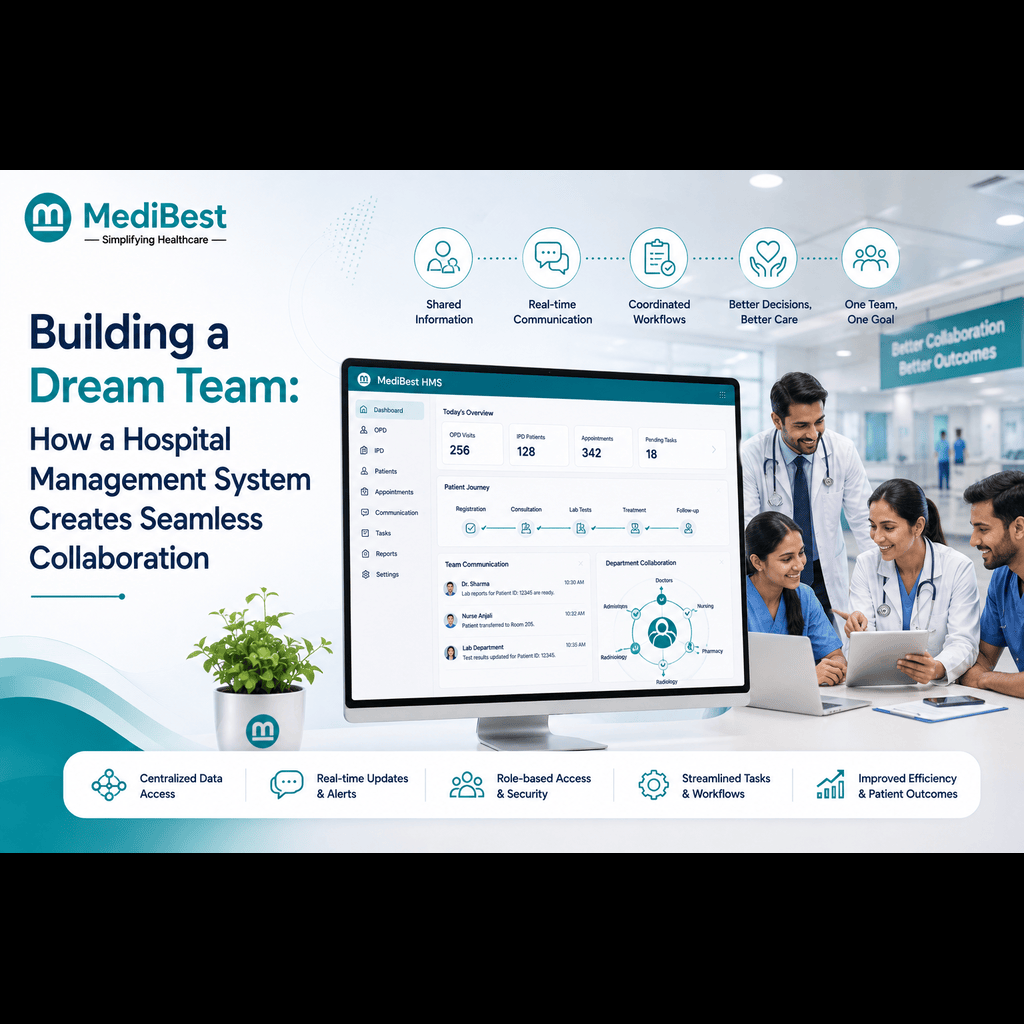
A hospital management system builds a stronger care team by giving every staff member clear role visibility, shared access to patient data, and real-time task tracking, so departments stop working in isolation. Instead of doctors, nurses, and administrative staff relying on scattered notes and verbal handoffs, everyone works from the same system with the same information. That shift alone is what turns a group of individually skilled employees into a genuinely coordinated team.
Most hospitals don’t struggle to hire good people. They struggle to get those good people working together efficiently once they’re on staff. A nurse who doesn’t know what the doctor just prescribed, a billing clerk who’s missing updated insurance details, a lab technician waiting on a request that got lost between departments. None of this happens because the staff is careless. It happens because the systems around them don’t support real teamwork. This is exactly where the right hospital management system software changes the daily reality of running a hospital.
What Actually Breaks Team Collaboration in Hospitals
Before looking at solutions, it helps to name the actual problems clearly.
- Staff working from different versions of patient information depending on which department they’re in
- No clear ownership of tasks, so things fall through the cracks between shifts
- Manual handoffs that depend on someone remembering to pass along critical details
- Administrative staff and clinical staff operating on completely separate systems that don’t talk to each other
- No visibility into who’s overloaded and who has bandwidth during a busy shift
Every one of these is a systems problem, not a people problem. Fixing them doesn’t require replacing staff. It requires giving them a shared platform.
How Centralized Data Turns Individuals Into a Team
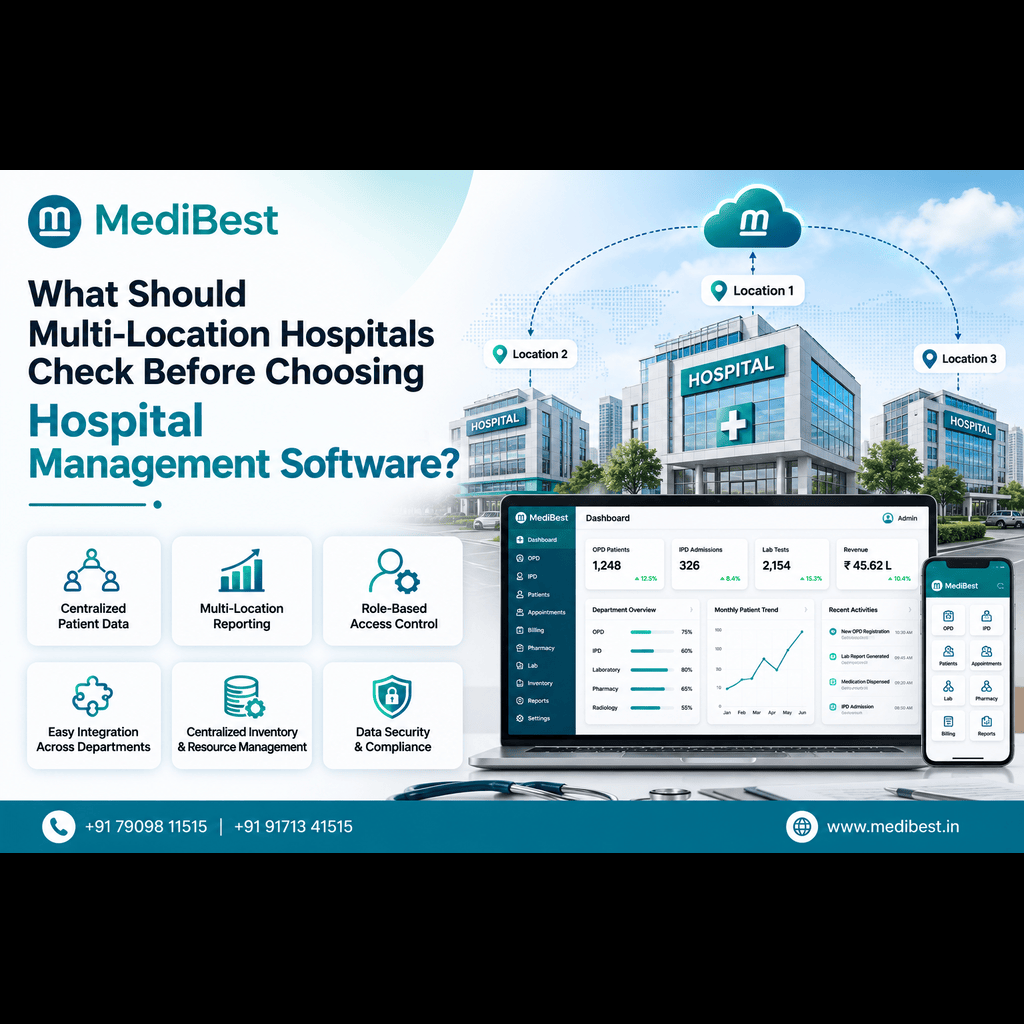
A healthcare management software platform’s biggest contribution to team building is simple: it removes the guesswork. When every department pulls from the same patient record, there’s no version confusion, no outdated information, and no one working off assumptions.
- Doctors see updated vitals and lab results the moment they’re entered, not after someone manually forwards them
- Nurses get accurate medication schedules without cross-checking paper charts
- Administrative staff see real-time bed occupancy instead of calling around to confirm
This is the foundation every other collaboration feature builds on. Without centralized data, nothing else on this list works properly.
Clear Role Definition Reduces Friction Between Departments
A common reason hospital teams feel disjointed isn’t lack of effort, it’s unclear ownership. When a task doesn’t clearly belong to someone, it either gets duplicated or dropped entirely. A well-configured software for healthcare management platform solves this through role-based task assignment.
- Every task in the system has a named owner and a deadline
- Staff can see exactly what’s expected of them without asking a supervisor
- Managers get visibility into workload distribution across shifts and departments
This kind of structural clarity is what actually builds trust between departments, since nobody has to wonder whether something was handled or forgotten.
Handoffs Are Where Most Teams Break Down, and Where HMS Helps Most
Patient handoffs between shifts or departments are historically one of the riskiest points in hospital operations. A digital handoff process inside the HMS replaces verbal or paper-based handovers with a structured, trackable record.
- Digital checklists ensure nothing gets skipped during a transfer
- Timestamped entries create accountability for every step
- Historical handoff data helps identify recurring gaps in the process
Hospitals that treat handoffs as a system feature rather than a verbal ritual see measurably fewer errors during shift changes.
Staff Scheduling That Reflects Actual Skill and Workload
Team building also depends on fair, informed scheduling. An HMS that tracks staff skills, certifications, and current workload can match the right person to the right task instead of relying on whoever happens to be available.
| Scheduling Without HMS | Scheduling With HMS |
| Based on availability guesswork | Based on real-time workload data |
| Skills matched manually, prone to error | Skills matched automatically to task needs |
| Overtime often discovered after the fact | Overload flagged before it happens |
| Shift handoffs undocumented | Shift handoffs logged and trackable |
This isn’t just an efficiency upgrade. It’s a morale factor. Staff who feel fairly scheduled and properly supported stay longer and collaborate better.
Data-Driven Dashboards Give Every Role What They Actually Need
A dream team doesn’t need everyone looking at the same dashboard. It needs everyone looking at the right one. Role-specific views inside an HMS keep information relevant instead of overwhelming.
- Doctors see patient vitals, pending results, and treatment plans
- Nurses see medication schedules and immediate patient requests
- Administrators see resource utilization and staffing gaps
This targeted visibility is part of why Medibest designs its HMS dashboards around specific hospital roles rather than a single generic view, since a one-size-fits-all dashboard rarely serves anyone well.
Choosing the Right System Matters More Than Most Hospitals Realize
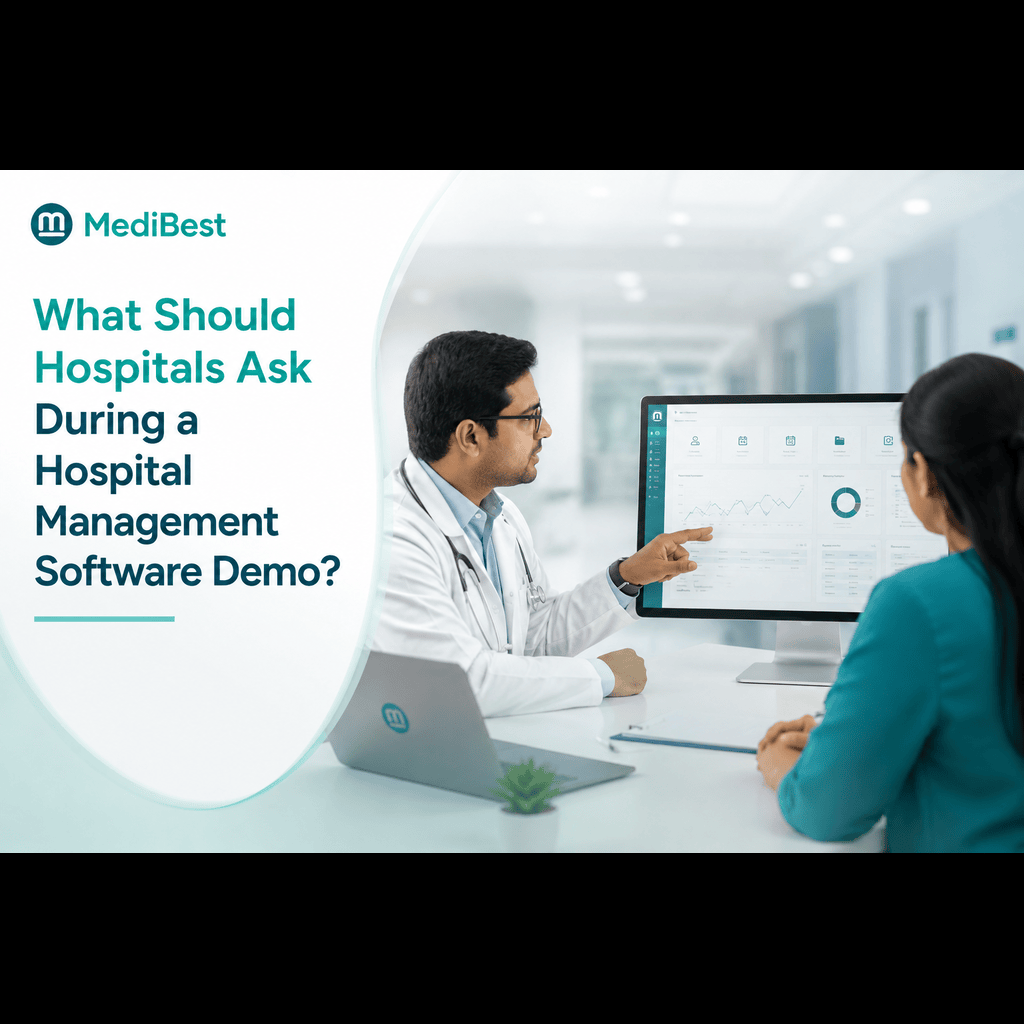
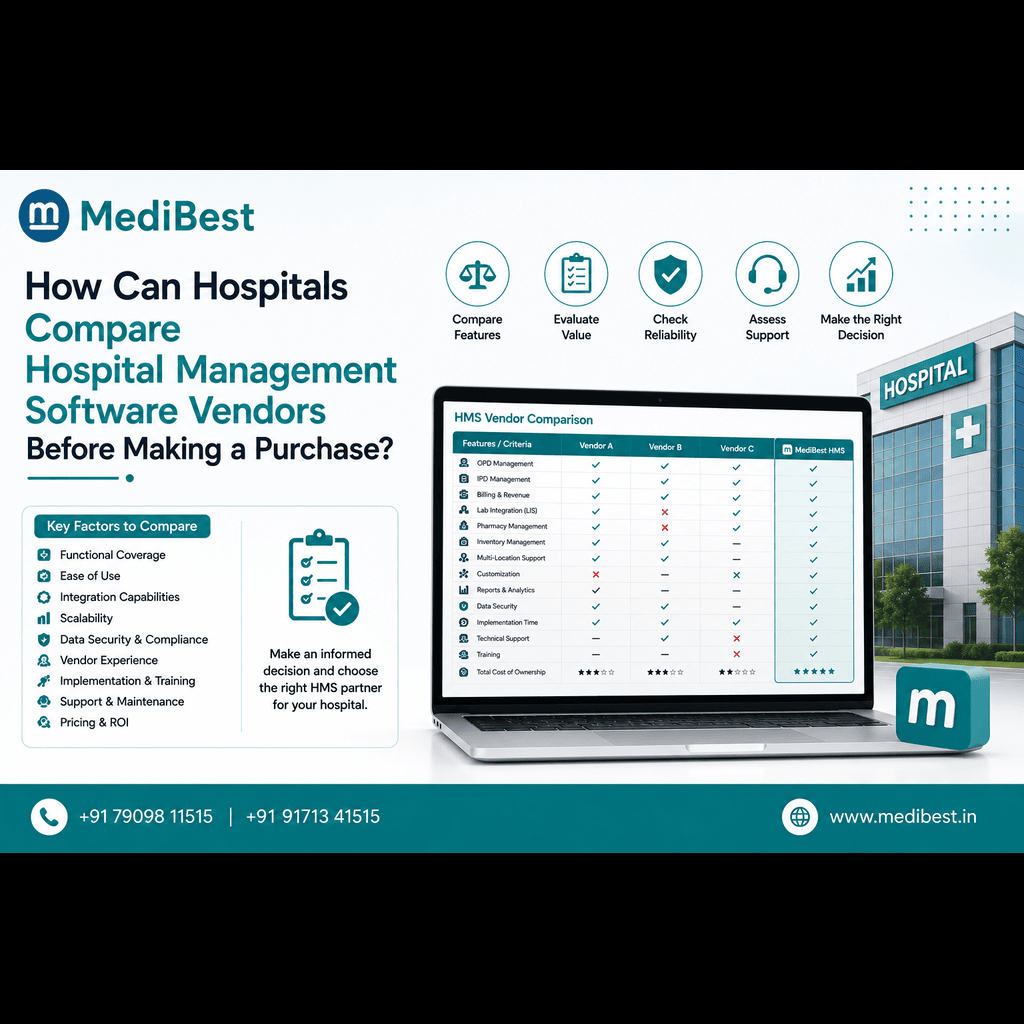
Not every HMS is built with team collaboration as a priority. Some focus purely on billing or records management and treat staff coordination as an afterthought. If you’re currently comparing platforms with this specifically in mind, it’s worth going in prepared. Our guide on what to ask during a hospital management software demo covers the exact questions that reveal whether a vendor’s system actually supports day-to-day team coordination or just looks good in a sales presentation.
Frequently Asked Questions
1. Can a hospital management system really improve staff collaboration, or is that just a marketing claim?
It’s measurable. Centralized patient data, role-based task assignment, and digital handoffs directly reduce the miscommunication that causes delays and errors, which are the actual sources of collaboration breakdowns in most hospitals.
2. Does implementing an HMS require retraining the entire staff?
Some training is necessary, but a well-designed system with role-specific dashboards is generally easier to adopt than hospitals expect, since each role only interacts with the features relevant to their work.
3. How does an HMS help with staff scheduling specifically?
It matches scheduling to real-time workload and staff skills rather than relying on manual guesswork, which reduces both overtime issues and understaffed shifts.
4. What’s the difference between general workflow software and an HMS built for team collaboration?
General workflow tools manage tasks in isolation. An HMS built for healthcare ties task management directly to patient data, so collaboration decisions are informed by actual clinical context, not just a to-do list.
5. Is this the same as HMS features for interdepartmental workflow transformation?
Not quite. Team collaboration through an HMS focuses on staff roles, scheduling, and handoffs, specifically how individual team members work together day to day, while broader workflow transformation looks at process redesign across the hospital as a whole.
Building the Team Starts With the Right System
A hospital’s staff can only work as a team when the systems around them support it. Clear roles, shared data, and structured handoffs turn individually capable people into a genuinely coordinated care team. Medibest builds its hospital management system around exactly this kind of role-based collaboration, so hospitals get a platform that supports teamwork instead of working around it.
Contact Medibest Techserv LLP, to see how Medibest supports staff collaboration in your hospital, get in touch with our team today.