To calculate the ROI of a hospital management solution, subtract total costs from total measurable benefits, divide the result by total costs, and multiply by 100. Count recovered billing revenue, lower medicine wastage, and extra patient contribution as benefits. Include setup, training, and yearly support as costs. Use your own hospital’s data over three to five years, not a vendor’s projected savings.
The formula takes one minute. Knowing what to count, and what to leave out, is where most hospitals go wrong. Here is the full method, a worked example, and a scenario test you can show your management team.
How do you calculate ROI in five steps?
- Measure your baseline: record billing errors, unbilled services, medicine wastage, and admin hours.
- Calculate total cost: include fees, setup, migration, training, hardware, integrations, and support.
- Estimate measurable benefits: count recovered charges, real savings, and extra patient contribution.
- Apply the formula: net benefit divided by total cost, multiplied by 100.
- Test scenarios: run conservative, expected, and optimistic cases before you decide.
Measure costs and benefits over the same period, ideally three to five years, so vendor comparisons stay fair.
What is the ROI formula?
ROI (%) = (Total benefits minus Total costs) ÷ Total costs × 100
If your hospital gains ₹30 lakh in measurable benefits from a ₹10 lakh investment, the net benefit is ₹20 lakh and the ROI is 200%.
- Positive ROI: benefits exceeded costs in that period
- Zero ROI: benefits and costs were equal
- Negative ROI: costs exceeded benefits
Also calculate the payback period, which is how long cumulative benefits take to cover the spend. When you evaluate hospital management software, check both numbers, because a strong three-year ROI does not mean you recover the money in year one.
Which costs should you include?
The licence or subscription is only one line. Count one-time and recurring costs together.
| Cost category | What to include |
| Software fees | Licence, subscription, or usage charges |
| Implementation | Setup, configuration, workflow customisation |
| Data migration | Transfer, cleaning, and checking of old records |
| Hardware | Computers, printers, scanners, network or server upgrades |
| Training | Trainer fees and staff time spent learning |
| Integration | Lab equipment, accounting tools, SMS, other systems |
| Support | Annual support, updates, renewals |
| Transition | Extra staff hours and slower work during rollout |
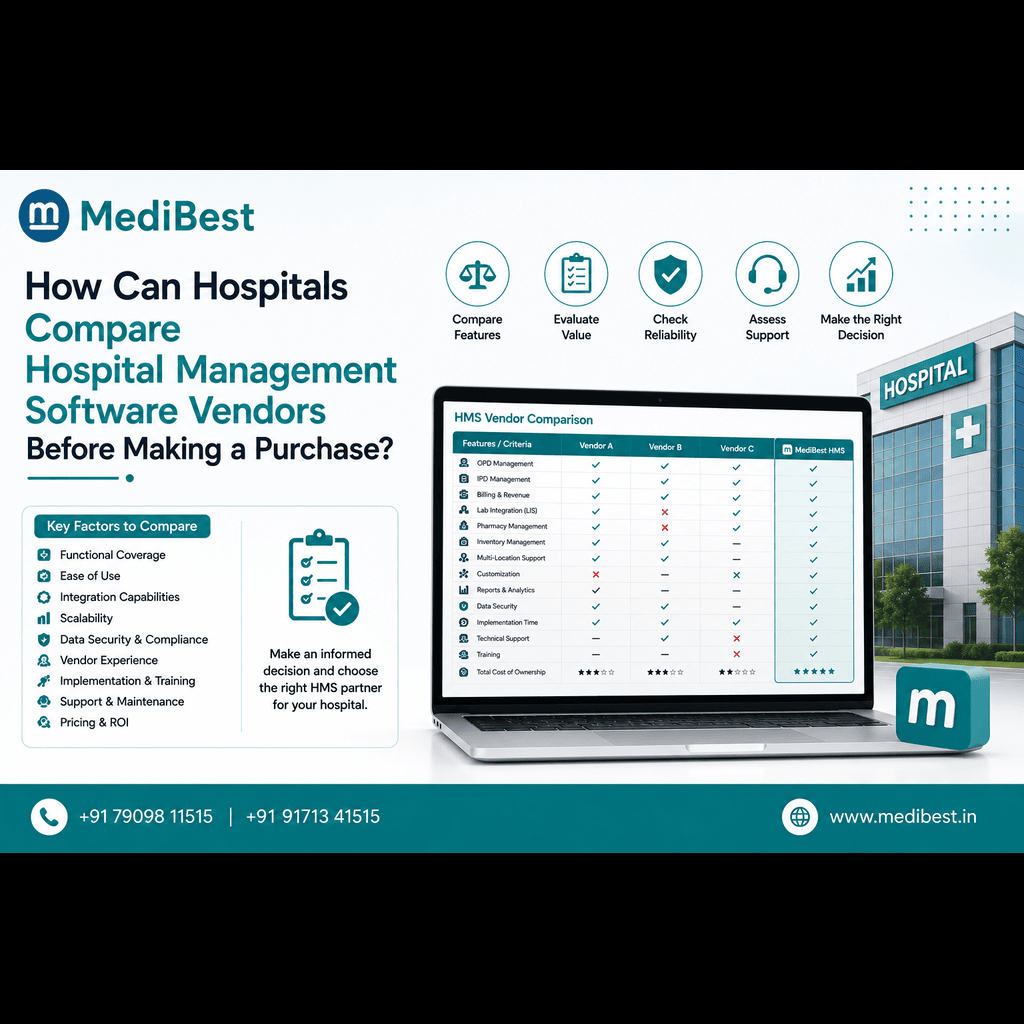
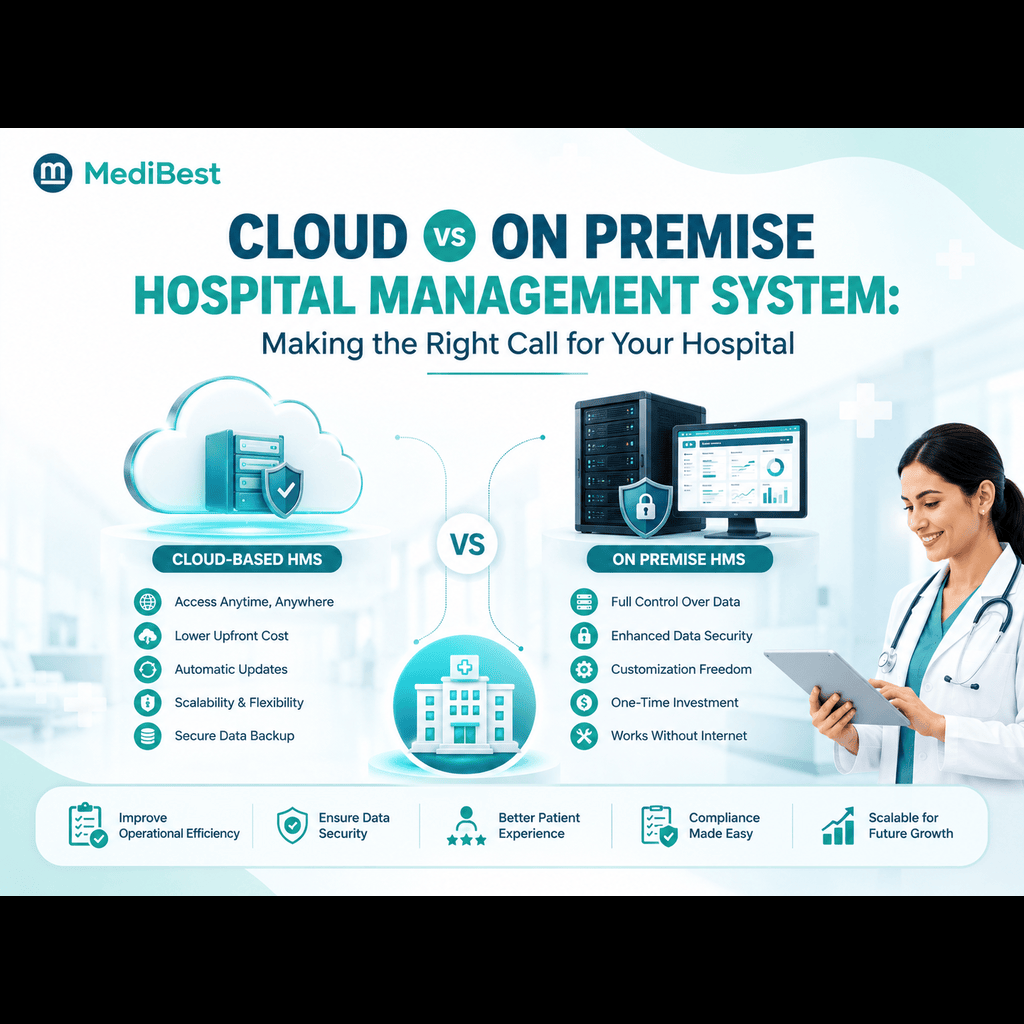
When you compare a hospital management software system across vendors, ask for a written three-year cost breakdown. For cloud versus on-premise options, compare the total cost of ownership, not just the first invoice.
Where do the savings actually come from?
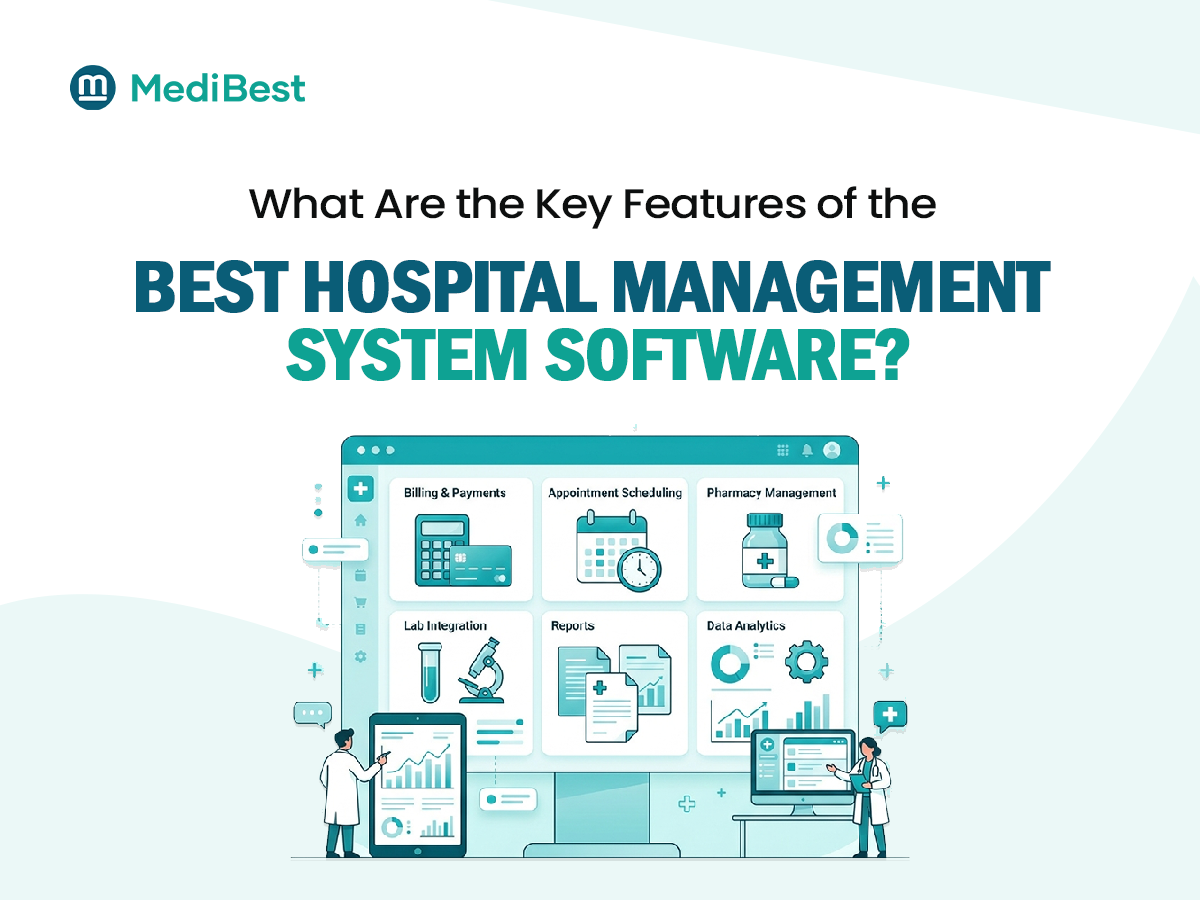
| Benefit area | How to estimate it |
| Billing accuracy | Missed charges identified and actually recovered |
| Insurance claims | Fewer avoidable rejections and rework costs |
| Pharmacy | Less expired, damaged, or wasted stock |
| Paperwork | Current printing and storage spend minus future spend |
| Admin efficiency | Realised cuts in overtime or temporary staffing |
| Patient capacity | Extra patient contribution after variable costs |
Two rules keep your numbers honest. Saved staff hours are not cash unless payroll or overtime actually falls, so log them as productivity gains instead. And never count one improvement twice, such as lower overtime and the same hours again as a separate saving.
How do you measure your baseline before buying?
Track these for at least thirty days, longer if patient volume swings by season:
- Time taken for registration, billing, and discharge
- Billing corrections and missed charges
- Value of services found unbilled
- Monthly value of expired or wasted medicines
- Claim rejection rate and payment delays
- Staff hours spent on manual reports
- Yearly spend on paper, printing, and storage
After go-live, measure the same indicators the same way. A before-and-after gap alone does not prove the software caused it, so adjust for changes in patient volume, staffing, and pricing. If you are still shortlisting vendors, these [questions to ask a hospital software company in Indore](INSERT BLOG URL) will keep that comparison fair.
What does a three-year ROI example look like?
These figures are made up for a hypothetical hospital evaluating a hospital management solution of its own. Replace them with your own data.
| Measurable benefit | Year 1 | Year 2 | Year 3 |
| Recovered missed charges | ₹3 lakh | ₹6 lakh | ₹6 lakh |
| Reduced medicine wastage | ₹1 lakh | ₹2 lakh | ₹2 lakh |
| Paper and printing savings | ₹0.5 lakh | ₹1 lakh | ₹1 lakh |
| Realised staffing savings | ₹2 lakh | ₹3 lakh | ₹3 lakh |
| Extra OPD contribution | ₹3.5 lakh | ₹4 lakh | ₹4 lakh |
| Total benefits | ₹10 lakh | ₹16 lakh | ₹16 lakh |
| Total costs | ₹10 lakh | ₹3 lakh | ₹3 lakh |
How is the ROI worked out?
- Total benefits: ₹10 + ₹16 + ₹16 = ₹42 lakh
- Total costs: ₹10 + ₹3 + ₹3 = ₹16 lakh
- Net benefit: ₹42 lakh minus ₹16 lakh = ₹26 lakh
- ROI: (₹26 lakh ÷ ₹16 lakh) × 100 = 162.5%
Year one is lower on purpose, because costs come first and staff are still learning. Cumulative benefits match the year-one cost at the end of that year, so payback is roughly twelve months if benefits arrive evenly. Check this against your real monthly cash flow. The result only holds if the staffing savings are truly realised and the OPD figure is after variable costs.
What if savings come in lower than expected?
Never rely on a single projection. Here is the same example with total costs held at ₹16 lakh.
| Scenario | Benefits achieved | Total benefits | 3-year ROI |
| Conservative | 70% of base case | ₹29.4 lakh | 83.8% |
| Expected | 100% of base case | ₹42 lakh | 162.5% |
| Optimistic | 120% of base case | ₹50.4 lakh | 215% |
If the conservative case still clears your management’s bar, the decision is on solid ground. These figures are illustrations, not a benchmark for hospitals.
Which mistakes make ROI inaccurate?
When you evaluate software for healthcare management, avoid these:
- Using vendor projections instead of your own baseline
- Leaving out migration, training, hardware, integration, or support costs
- Assuming every department adopts the system immediately
- Treating saved hours as cash without proof
- Counting gross patient revenue as net benefit
- Comparing three years of benefits with costs from a different period
A conservative estimate you can defend beats a big projection nobody can verify.
How do you choose a solution that delivers value?
Pick the system that fixes your biggest cost leaks first, fits your workflows, and gives you a way to measure improvement. Before choosing a vendor, ask:
- Which current problem will each module address?
- What baseline data should we record first?
- How will the impact be shown after go-live?
- What are the full implementation and recurring costs?
- Can it scale as patient volume grows?
MediBest, an Indore-based healthcare-IT company, offers a hospital management system covering registration, billing, pharmacy, laboratory, and reporting, so you can match each module to a number in your baseline. Also record gains that are hard to price, such as clearer records and readiness for ABDM workflows (official guidance: abdm.gov.in), in a separate list beside your ROI.
Frequently Asked Questions
1. How do you calculate ROI for hospital management software?
Subtract total costs from total measurable benefits, divide by total costs, and multiply by 100. Include implementation and recurring costs, and use your hospital’s own data to estimate savings.
2. What is a good ROI for a hospital management system?
No single figure applies to every hospital. Results depend on existing inefficiencies, hospital size, adoption, and benefits you can verify. Compare projected ROI and payback against your own financial goals.
3. How long does it take for hospital software to pay for itself?
It depends on implementation time, total investment, and how fast measurable benefits arrive. Calculate it from cumulative benefits and costs month by month instead of assuming a fixed number.
4. What hidden costs should hospitals expect?
Data migration, hardware upgrades, integrations, training, customisation, annual support, and temporary productivity loss during rollout. Request a complete written cost breakdown before comparing vendors.
5. Does hospital management software reduce operating costs?
It can reduce selected costs through better billing control, inventory visibility, and less paperwork. Actual savings depend on your current processes, the modules you use, and whether the gains turn into measurable financial results.
6. Can a small hospital or nursing home use the same ROI method?
Yes, the formula is identical at any size. Start with two or three areas, such as missed charges, medicine wastage, and admin workload.
Conclusion
Calculating hospital management solution ROI takes four disciplines: measure your baseline, include every cost, count only defensible benefits, and test a conservative case. A well-run system can improve financial control and workflow efficiency, but the return depends on your hospital and how well staff adopt it. If you want to find which workflows offer the biggest measurable gain, the MediBest team can walk you through your numbers.