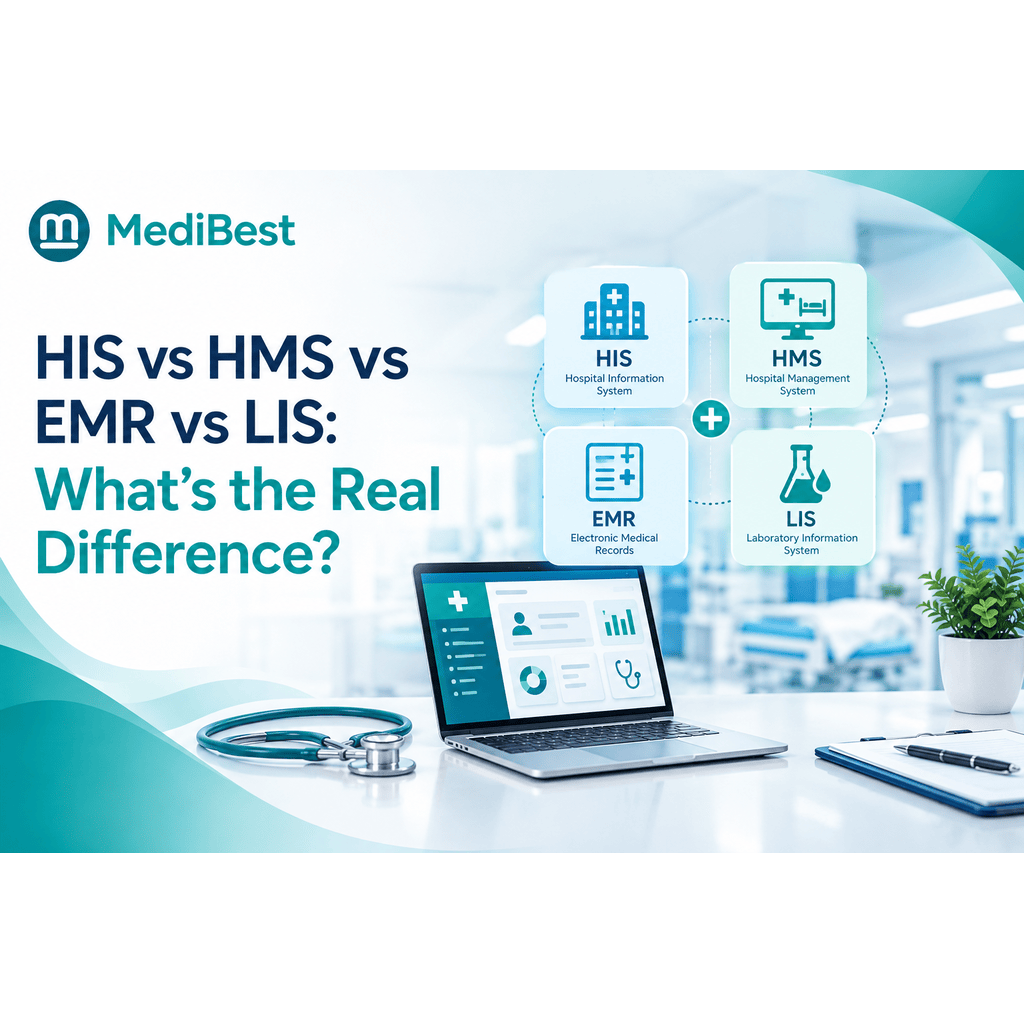
HIS, HMS, EMR, and LIS are not the same thing, even though hospitals often use the terms loosely. In short, HIS is the broadest term for a hospital’s overall digital backbone, HMS usually refers to the administrative and operational side of that backbone, EMR is the digital patient chart, and LIS is the specialised system that manages lab tests and results. Each one solves a different problem, and most modern hospitals need all four working together, not just one.
If you have ever sat through a vendor demo and heard these terms used interchangeably, you are not alone. The confusion is common because these systems overlap in places and many vendors bundle them under one product name. But knowing the difference matters, especially if you are evaluating software and want to be clear about exactly what you are paying for.
This guide breaks down each term in plain language, shows where they overlap, and explains why hospitals typically need more than one of them working together.
What Is HIS (Hospital Information System)?
HIS is the umbrella term. It refers to the complete digital ecosystem a hospital runs on, covering clinical, administrative, and financial functions in one connected environment.
Think of HIS as the overall structure, with everything else, including HMS, EMR, and LIS, living as parts inside it. A hospital’s HIS might include:
- Patient registration and appointment records
- Clinical documentation and treatment history
- Billing, insurance, and financial reporting
- Inventory and pharmacy tracking
Because HIS is such a broad term, vendors sometimes use it and HMS interchangeably in marketing material. Technically, though, HIS is the wider system and HMS sits inside it.
What Is HMS (Hospital Management System)?
A hospital management system focuses mainly on the day-to-day running of a hospital rather than deep clinical documentation. This is the layer your front desk, billing counter, and administrators interact with the most.
A typical HMS handles:
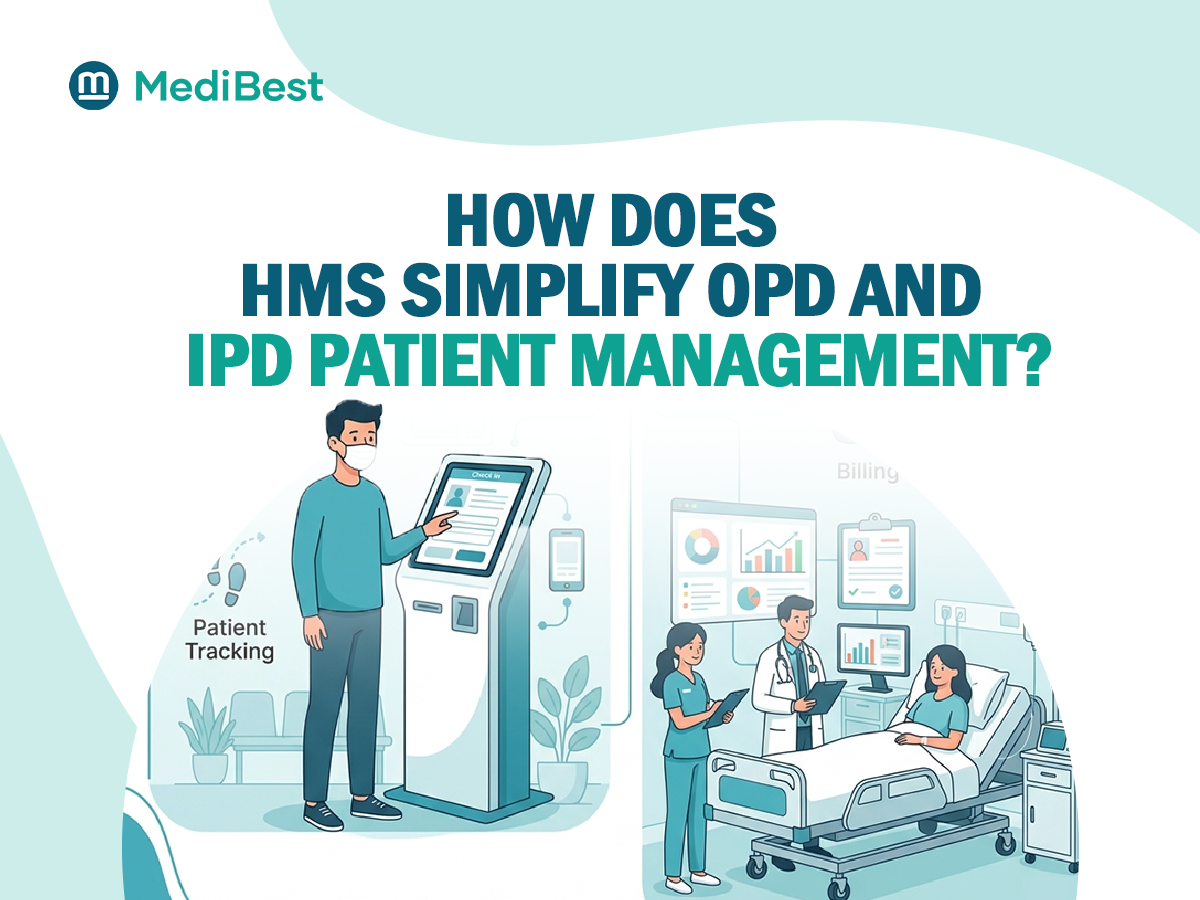
- OPD and IPD patient flow
- Appointment scheduling
- Billing and payments
- Bed and ward management
- Basic reporting for hospital administrators
For most small and mid-size hospitals in India, when someone searches for information about hospital management system platforms, this is usually what they actually need first: a system to organise daily operations before adding deeper clinical modules. It is the practical starting point for digitising a hospital that is still running partly on registers and spreadsheets.
Still running OPD and billing on registers and spreadsheets? See what a day looks like once it’s all in one system.
What Is EMR (Electronic Medical Record)?
EMR is the digital version of a patient’s chart. It stores a patient’s medical history, diagnoses, prescriptions, allergies, and treatment notes within a single facility.
A few things worth knowing about EMR:
- It is clinical in nature, unlike HMS, which is mostly administrative
- It is used primarily by doctors and nurses during consultations and rounds
- It usually stays within one hospital’s system, unlike an EHR (Electronic Health Record), which is designed to be shared across providers
Many hospitals confuse EMR with HMS because a good hospital platform bundles both together. But strictly speaking, EMR is the clinical record layer, while HMS is the operational layer that surrounds it.
What Is LIS (Laboratory Information System)?
LIS is a specialised system built specifically for hospital or diagnostic labs. Its job is to manage the full lifecycle of a lab test, from the moment a sample is collected to the moment the report reaches the doctor.
A solid LIS typically covers:
- Sample tracking and barcoding
- Test result entry and validation
- Integration with lab machines and analysers
- Automatic report generation and delivery to the patient’s file
Where LIS becomes powerful is when it connects directly with the hospital’s broader health care management system, so lab results flow straight into a patient’s EMR without anyone re-entering data manually. That single integration alone eliminates a huge source of transcription errors in busy hospitals.
Tired of lab reports being walked from the lab to the doctor’s desk? Find out how a connected LIS fixes that in one step.
How These Systems Work Together
None of these systems are meant to replace each other. In a well-built hospital setup, they work like layers of the same building:
- HIS is the entire structure
- HMS manages the operational floors, admissions, billing, scheduling
- EMR holds each patient’s individual file within that structure
- LIS feeds lab data directly into that file
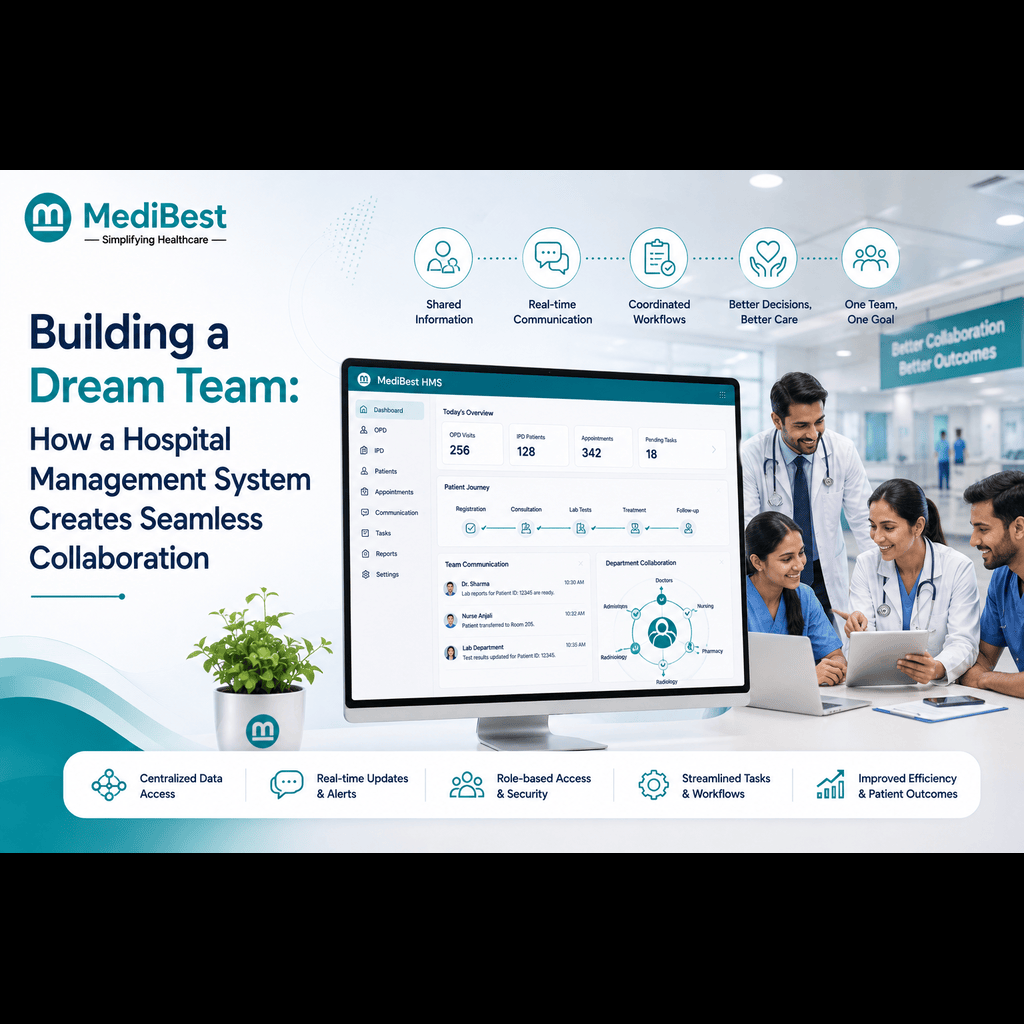
When these pieces are disconnected, staff end up re-entering the same patient details in three different places, and lab reports get delayed because someone has to walk a printout from the lab to the doctor’s desk. When they are properly connected, a patient’s registration, consultation notes, prescriptions, and lab results all live in one traceable record.
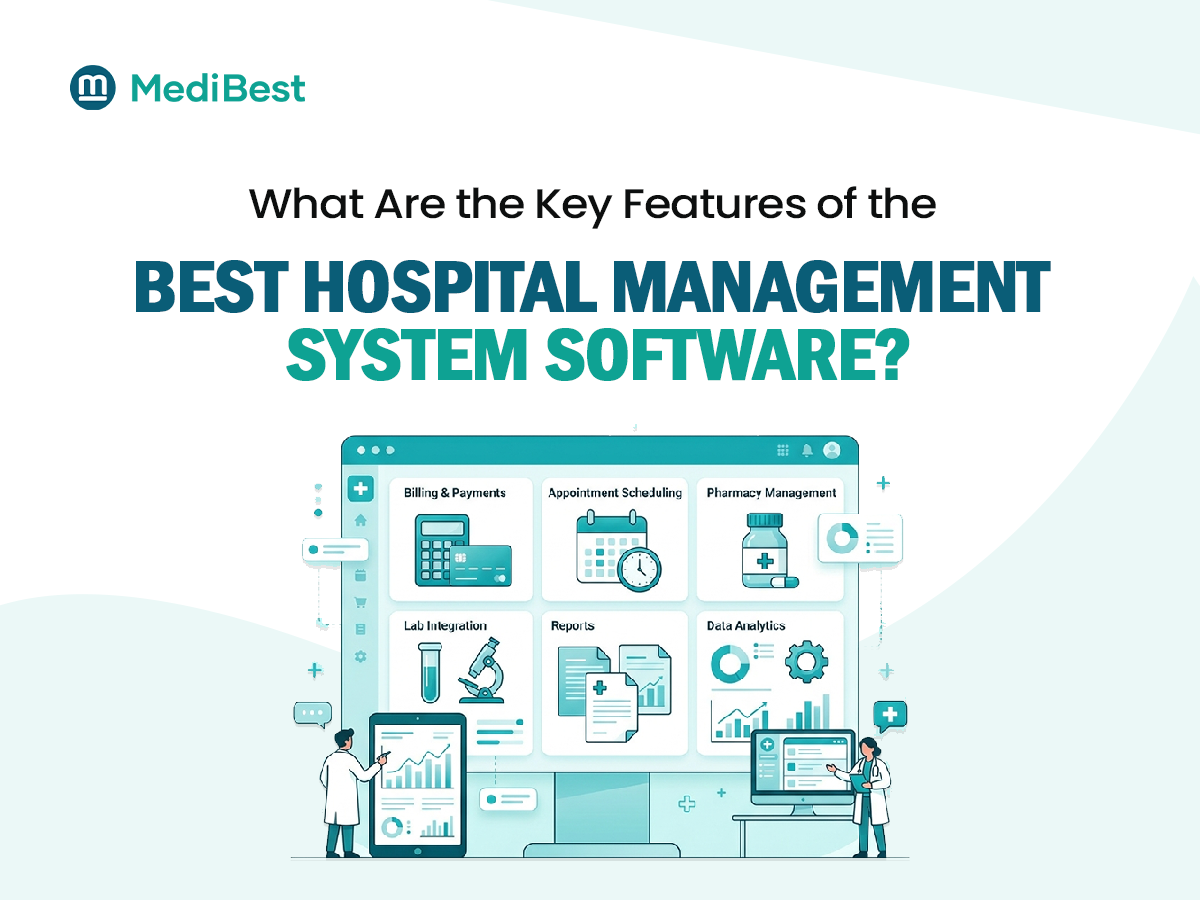
If you are still mapping out which pieces your hospital actually needs, our earlier post on the key features of the best hospital management system software is a good next read, since it breaks down these modules from a buying perspective.
Where ABDM and ABHA Fit Into This Picture
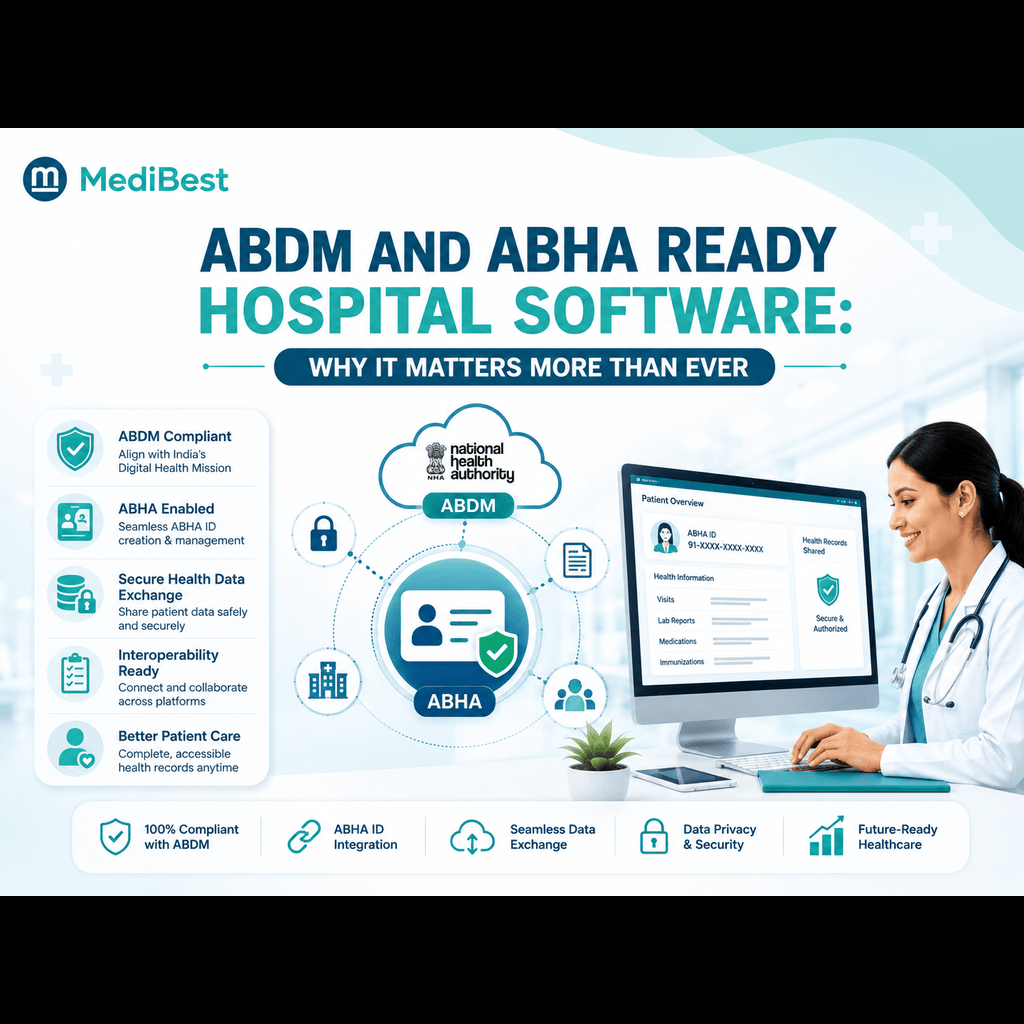
This is where things get more relevant for Indian hospitals specifically. The Ayushman Bharat Digital Mission is pushing hospitals to connect their internal records, meaning HMS, EMR, and LIS data, into a nationally recognised digital health framework through ABHA-linked patient IDs.
Practically, this means:
- A patient’s EMR can be linked to their ABHA ID so records are portable across providers
- Lab reports generated through the LIS can be shared digitally through ABDM with patient consent
- Hospitals using a connected HMS are better positioned to meet these requirements without a separate overhaul later
Hospitals that treat HIS, HMS, EMR, and LIS as one connected system, rather than four separate tools, find it far easier to stay compliant as these digital health rules keep evolving.
Why This Distinction Matters When You’re Buying Software
Understanding these differences is not just academic. It directly affects what you should ask a vendor before signing a contract:
- Ask whether their hms healthcare management systems include EMR and LIS natively, or whether those need separate integrations
- Ask how lab results move from LIS into a patient’s EMR, and whether that happens automatically
- Ask if the platform is ABDM-ready or if ABHA integration is a future add-on
- Ask what happens to your data if you ever need to switch vendors
At Medibest, this is exactly the kind of connected setup we build for hospitals: HMS, EMR, and LIS working as one system instead of stitched-together tools, with ABDM and ABHA support built in rather than bolted on later.
Not sure which of these four your hospital actually needs? Talk to us and get a straight answer, not a sales pitch.
Frequently Asked Questions
1. Is HMS the same as HIS?
Not exactly. HIS is the broader term for a hospital’s entire digital system, while HMS typically refers to the administrative and operational modules, such as billing, scheduling, and patient flow, that sit within that larger system.
2. What is the difference between EMR and HMS?
EMR is the clinical record of a patient’s history, diagnoses, and treatment, while HMS handles the administrative side of running a hospital, such as registration, billing, and bed management. Most modern platforms combine both.
3. Does a small hospital need a separate LIS?
If a hospital runs its own lab or handles a meaningful volume of tests, a connected LIS saves significant time by automating result entry and reducing manual errors. Smaller labs sometimes start with basic result entry inside their HMS and add a dedicated LIS as volume grows.
4. Can HMS, EMR, and LIS work as one system?
Yes, and this is increasingly the standard rather than the exception. A well-designed hospital management system integrates all three so patient data, records, and lab results move automatically instead of being entered multiple times.
5. How does ABDM affect HMS, EMR, and LIS?
ABDM encourages hospitals to link patient records across these systems to an ABHA ID, making health records portable and shareable with patient consent. Hospitals with connected systems adapt to these requirements more easily than those using disconnected tools.
Bring HIS, HMS, EMR, and LIS Together in One Platform
If your hospital is currently juggling separate tools for records, billing, and lab results, it may be time to bring them under one connected system. Talk to the Medibest team for a walkthrough of how HMS, EMR, and LIS can work together on a single, ABDM-ready platform built for hospitals like yours.