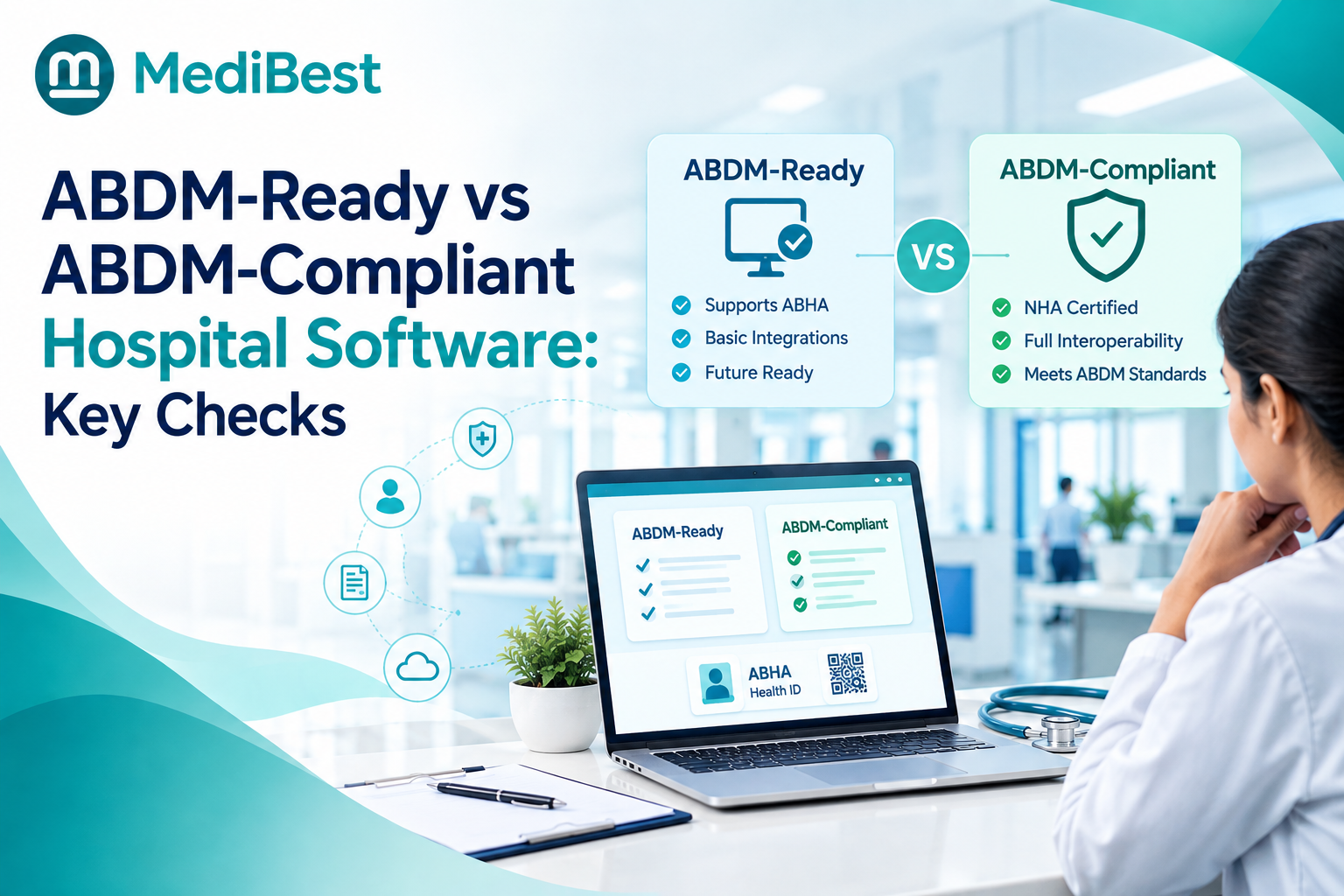
ABDM-ready means a hospital software vendor has built the technical capability to support ABDM workflows, while ABDM-compliant means the hospital itself is registered on the Health Facility Registry and actively exchanges records through the network. A vendor can be ready without your hospital being compliant, and no software purchase alone makes you compliant on day one. The gap between the two is exactly where hospitals get misled during vendor pitches.
If you have heard both terms used interchangeably in a sales call and walked away unsure what you were actually being promised, you are not alone. This guide breaks down the real difference and gives you a concrete checklist to verify before you sign anything.
What “ABDM-Ready” Actually Means
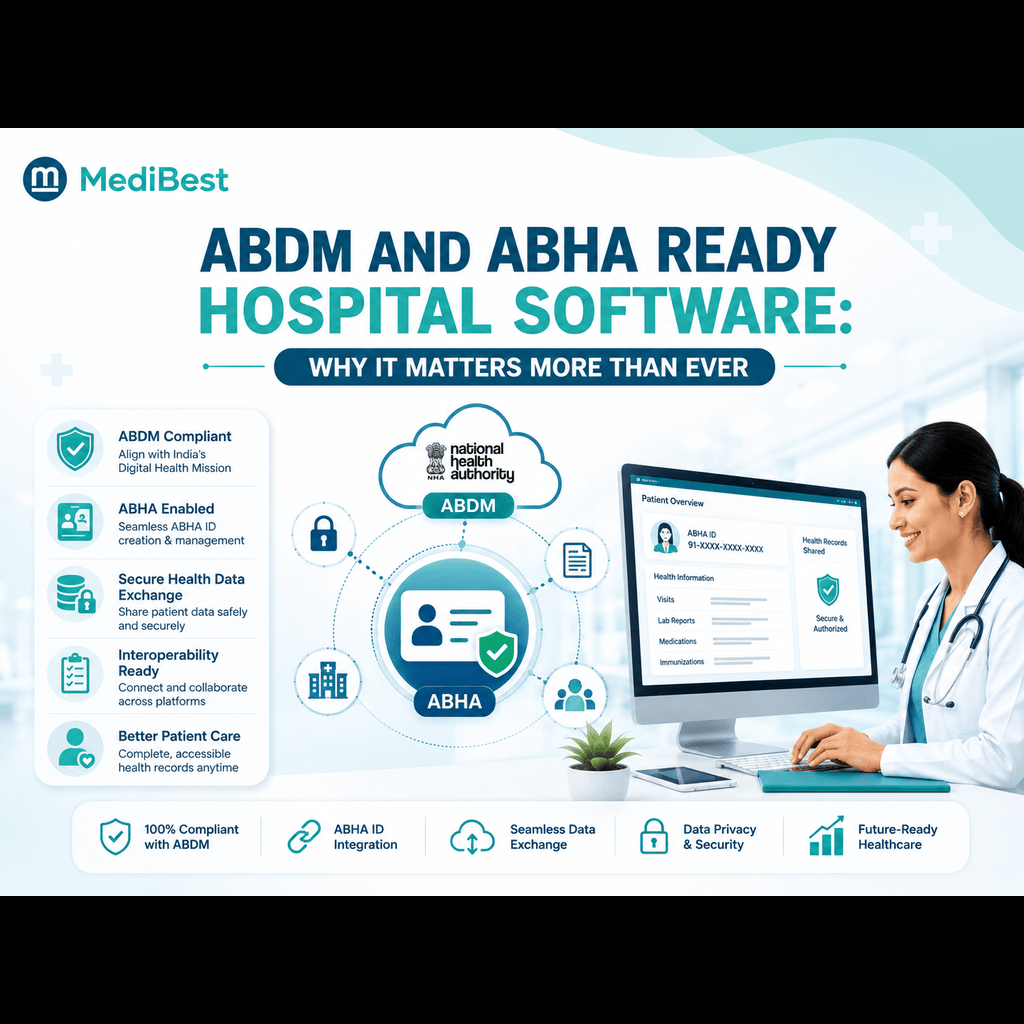
ABDM-ready is a claim about the software, not about your hospital. It means the platform has the technical building blocks needed to participate in the Ayushman Bharat Digital Mission, such as the ability to generate ABHA IDs, structure records in FHIR format, and connect to the Health Information Exchange.
Here is what that typically covers on the vendor’s side:
- ABHA creation and linking built into patient registration
- Records structured in FHIR format automatically, not manually converted later
- A tested connection to the Health Information Exchange and Consent Manager
- Support for facility and practitioner identifiers once your hospital registers them
None of this requires your hospital to have done anything yet. A vendor can market itself as ABDM-ready the day their product passes internal testing, well before a single hospital using it has gone live on the network.
What “ABDM-Compliant” Actually Means
ABDM-compliant is a claim about the hospital, not just the software. It means your facility is registered on the Health Facility Registry, your practitioners are listed on the Healthcare Professionals Registry, and you are actually creating ABHA-linked records and sharing them through the network with patient consent.
This is where the distinction matters most for a buyer:
- Registration on the Health Facility Registry has to happen at the hospital level, and no vendor can do this step for you
- Compliance is measured by what your hospital is actually doing, not what your software is capable of doing
- A hospital can own ABDM-ready hospital management software for months and still not be compliant if the facility registration step was never completed
In short, readiness lives in the product. Compliance lives in your hospital’s actual registration and usage.
Not sure if your current setup is ready, compliant, or neither? Get a straight answer in fifteen minutes, no sales pitch attached.
Why This Distinction Gets Blurred in Vendor Pitches
Most vendors are not lying outright, but the marketing language rarely draws a clean line. “ABDM-compliant” gets used loosely because it sounds more finished and more reassuring than “ABDM-ready,” even when the vendor genuinely only means the software has the capability built in.
A few reasons this confusion persists:
- Sales teams default to whichever term sounds stronger, not whichever is technically accurate
- Buyers rarely ask for proof, so vendors are not pushed to be precise
- The two terms genuinely overlap enough that even well-meaning vendors mix them up in casual conversation
This is not usually deliberate deception, but it does mean the burden of asking the right question sits with the hospital, not the vendor.
What to Actually Check Before You Buy
Instead of taking either label at face value, verify it with specific questions and documentation.
- Ask for proof of Health Facility Registry integration, not just a feature list. A vendor should be able to show you the actual registration flow, not just describe it.
- Request a live demo of ABHA creation and linking, not a slide with a screenshot. If they cannot show it working in real time, treat that as a warning sign.
- Ask which hospitals using their software are currently compliant, not just using ABDM-ready features. A long client list means little if none of them have completed facility registration.
- Confirm who handles your Health Facility Registry registration. Some vendors assist directly, others leave it entirely to the hospital, and you need to know which before you sign.
- Check if their FHIR record generation has been tested against real hospital data, not just sample data in a demo environment.
A vendor who answers these clearly and specifically is generally more trustworthy than one who repeats the words “fully compliant” without offering to show you anything.
Ready to see the actual ABHA and FHIR workflow instead of a slide deck? Watch it run live on real patient data before you decide anything.
Red Flags to Watch For
A few patterns tend to signal a vendor is stretching the truth on this specific point:
- They call the software “fully ABDM compliant” without ever mentioning the hospital’s own registration responsibility
- They cannot explain the difference between ABHA creation and Health Facility Registry registration when asked directly
- They have no client hospitals willing to confirm they are actively exchanging records through the network
- Pricing for ABDM features is bundled vaguely without a clear breakdown of what is included versus what requires additional setup
None of these automatically mean the hospital software company is dishonest, but they are worth a direct follow-up question before you commit budget and staff time to the switch.
Where Medibest Fits Into This
Medibest builds ABDM-ready capability directly into the platform, including ABHA creation and linking at registration, and also walks hospitals through the Health Facility Registry step so the path to actual compliance is clear from day one rather than left as a separate project. If you already read through how ABHA creation and linking works day to day, our guide on creating and linking ABHA IDs during patient registration shows exactly what that part of the process looks like at the front desk.
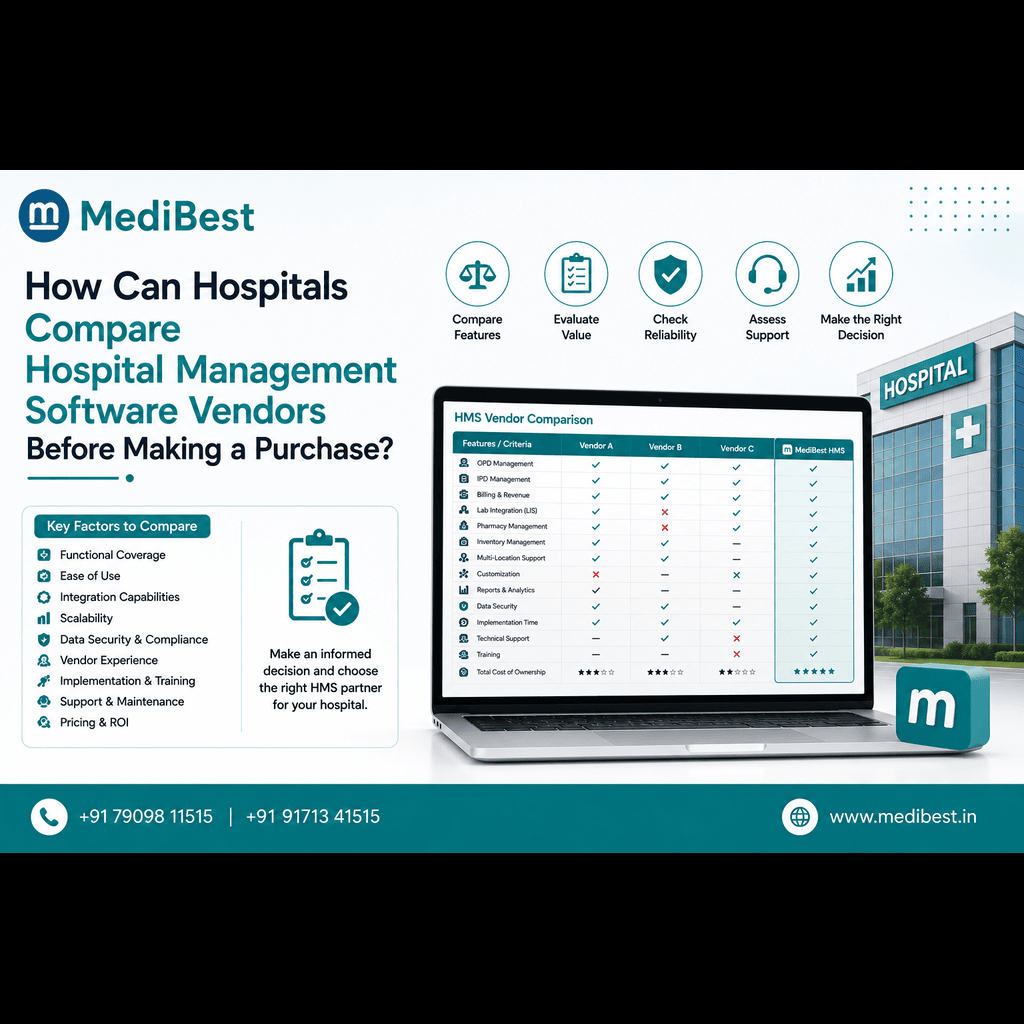
For a hospital comparing a handful of vendors on this specific point, asking each one to walk through the checklist above tends to separate genuine readiness from marketing language fairly quickly.
Frequently Asked Questions
1. Is ABDM-ready the same as ABDM-compliant?
No. ABDM-ready describes a software vendor’s technical capability to support ABDM workflows. ABDM-compliant describes a hospital that has completed its own facility registration and is actively exchanging records through the network.
2. Can a hospital become ABDM-compliant just by buying ABDM-ready software?
Not automatically. The software provides the capability, but the hospital still needs to register on the Health Facility Registry and begin actual ABHA-linked record sharing to be considered compliant.
3. Who is responsible for Health Facility Registry registration, the vendor or the hospital?
The registration has to happen at the hospital level, though many vendors assist with the process. It is worth confirming exactly how much support a vendor provides before assuming it is handled automatically.
4. How can a hospital verify a vendor’s ABDM-ready claim?
Ask for a live demonstration of ABHA creation, FHIR record generation, and a reference from an existing client hospital that is actually compliant, not just using the software.
5. Does becoming ABDM-compliant cost extra beyond the software itself?
Costs vary by vendor, but the core registration process itself does not have a government fee. Any additional cost usually comes from vendor support during setup, which is worth clarifying upfront.
Verify Before You Commit, Not After
If a vendor cannot clearly show you the difference between what their software can do and what your hospital still needs to complete, that gap will become your problem after the contract is signed, not theirs.
See exactly what readiness looks like versus what compliance actually requires.