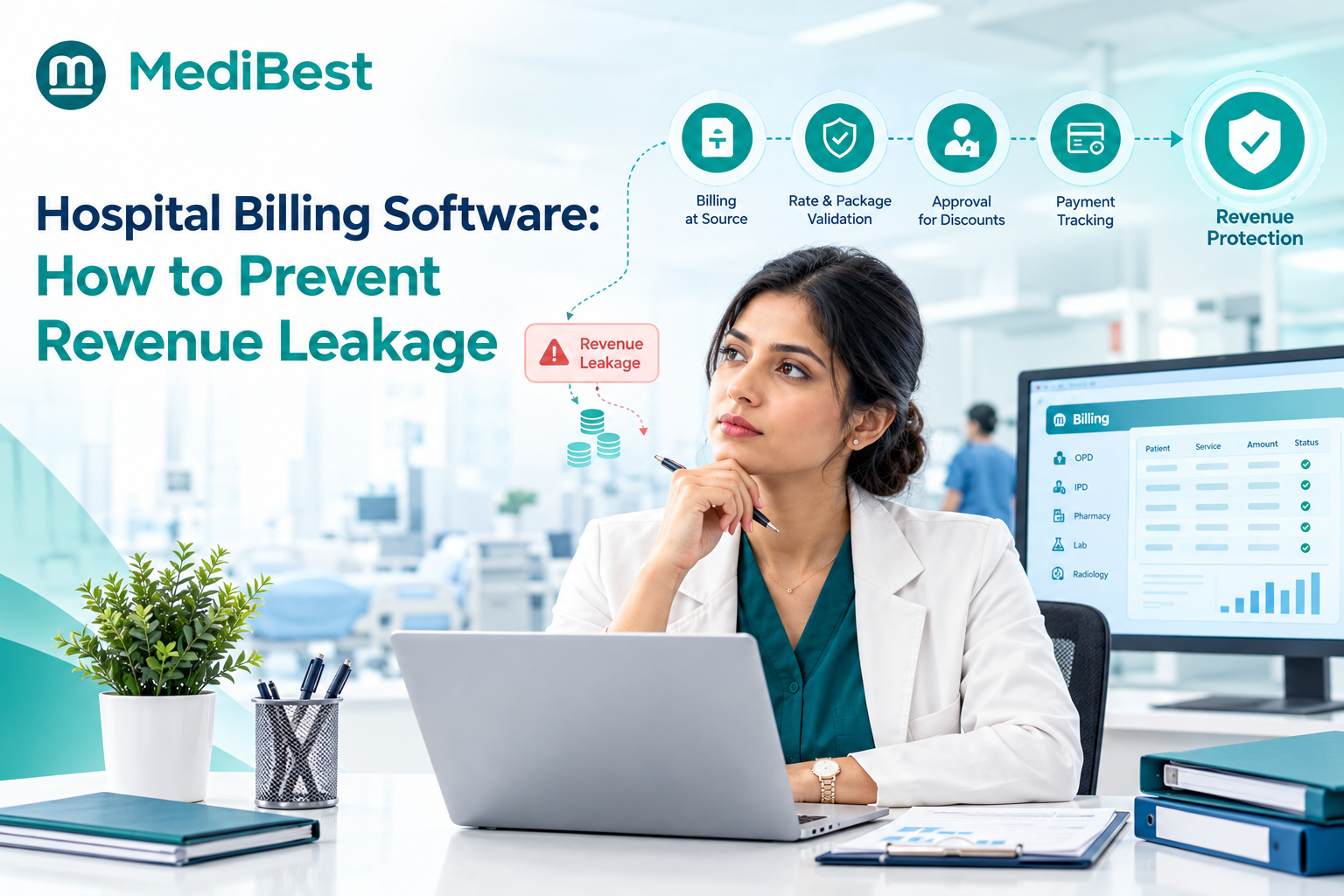
Hospitals can reduce revenue leakage by capturing every billable service, applying the correct tariffs and package rates, and tracking payments until they are reconciled. Hospital billing software helps by connecting departments such as OPD, IPD, pharmacy and laboratory services, reducing manual entry and flagging billing exceptions for review.
Revenue leakage rarely comes from one large mistake. It often results from repeated gaps, such as missed procedure charges, unapproved discounts, incorrect package rates and unpaid insurance claims. Understanding where these gaps occur is the first step toward improving billing accuracy and financial control.
What Is Revenue Leakage in a Hospital?
Revenue leakage is money a hospital has earned by delivering care but never collects. It happens in three ways:
- Never billed: the service was given, but no charge was posted
- Billed wrong: the wrong rate, package or quantity was used, so the bill is lower than it should be
- Billed but not collected: the bill was raised, but the payment was never followed up or matched
Each one looks small on a single patient. Across hundreds of admissions a month, they add up to a real hole in the budget, and most hospitals only notice it when cash starts to feel tight.
Where Does Revenue Leak in a Hospital?
These are the seven leak points that show up most often, with a practical fix for each.
- Missed charges for services and consumables: Night procedures, extra monitoring, consumables used in the ward or OT and extra bed days are easy to forget when charges depend on paper slips collected at discharge.
Fix: post charges from the original order or ward entry, as care happens.
- Wrong tariff or package rate; A patient moves from a general ward to a private room, or a package limit is crossed, and the bill still uses the old rate.
Fix: set rates by ward, payer and package, and raise an alert when a package limit is reached.
- Unapproved discounts and concessions: When anyone at the counter can reduce a bill, discounts grow quietly.
Fix: set approval levels, record a reason for every concession, and review a discount report every week.
- Pharmacy issues that never reach the bill: Medicines issued to the ward but not billed, or returns that are not credited correctly, create gaps between stock and revenue.
Fix: link pharmacy issues and returns directly to the patient’s running bill.
- Rushed discharge billing: When a bill is prepared in a hurry at the end of a stay, services get missed.
Fix: keep a running bill through the stay and run a pre-discharge check so nothing is left unbilled.
- Insurance and credit bills nobody follows up; Claims get rejected for missing documents, and part-payments are not matched to the right bill.
Fix: track outstanding amounts payer by payer and chase them by age.
- Cash and deposit gaps: Advance deposits that are not adjusted, refunds without a trail and counter collections that do not match the day’s records all leak money.
Fix: reconcile collections at the close of every shift.
Not sure how many of these seven are costing your hospital money? Let us walk through your billing flow and show you where charges slip.
How Better Financial Workflows Close These Gaps
Software alone does not stop leakage. It works when the hospital’s billing process follows a few clear rules, and a reliable hospital billing management system enforces those rules so staff do not have to rely on memory.
- Bill as care happens: Charges post when a test is ordered, a medicine is issued or a procedure is done, not at discharge.
- Let the system hold the rates: Tariffs, packages and payer rules live in one place, so staff never pick a rate from memory.
- Put approvals on discounts: Every concession needs a named approver and a reason.
- Close each day with reconciliation: Collections, refunds and deposits are matched before the counter shuts.
- Report on exceptions: Unbilled services, high discounts and old outstanding bills show up in reports instead of surprises.
Our earlier guide on how automated billing protects hospital profits looks at the software side. This guide focuses on where leaks start and how to catch them.
What Should You Look for in a Billing System?
Not every billing tool is built for the way hospitals actually work. Check for these:
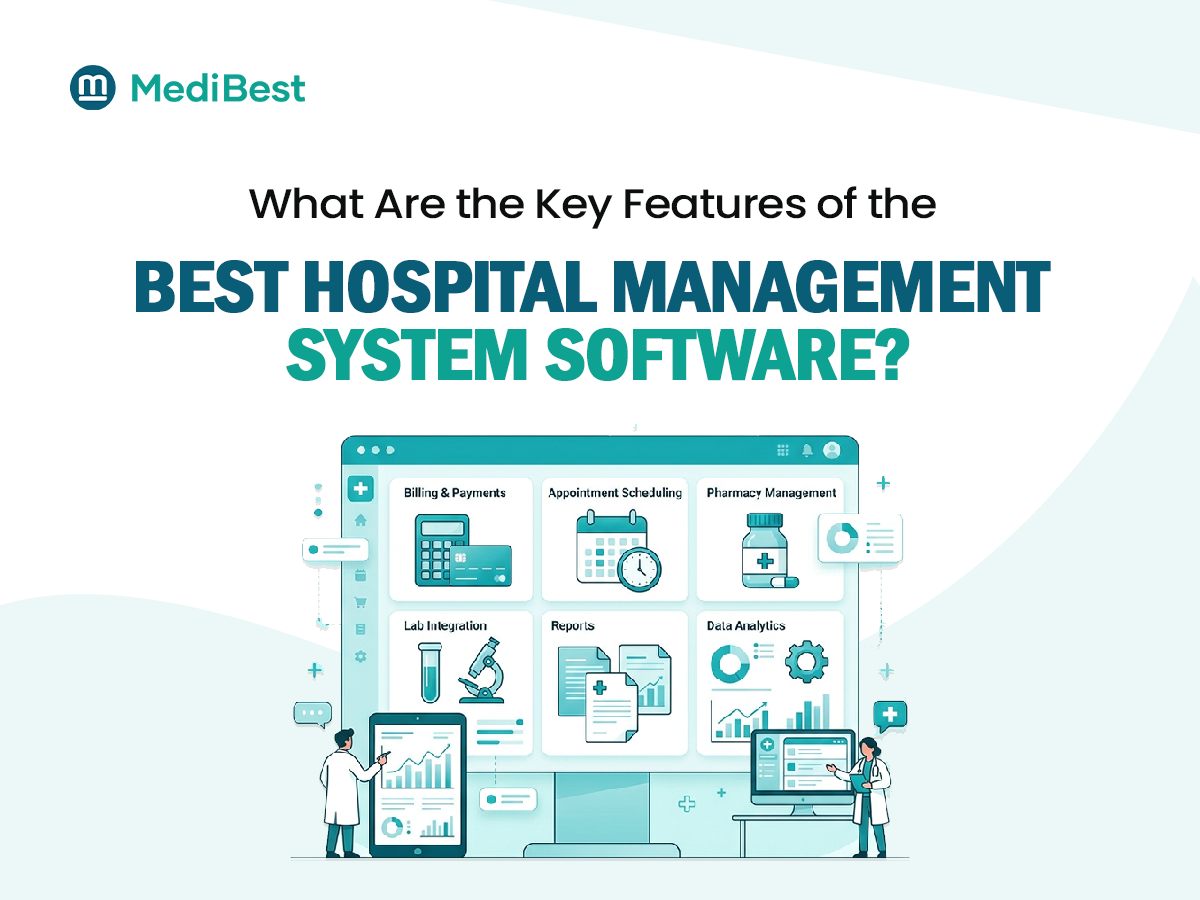
- Charges that flow in automatically from OPD, IPD, lab, pharmacy and procedures
- Support for packages, panel rates and payer-wise billing
- Approval rules for discounts, refunds and rate changes
- A running bill that staff can view at any point during a stay
- Payer-wise outstanding and ageing reports
- A full audit trail showing who changed what, and when
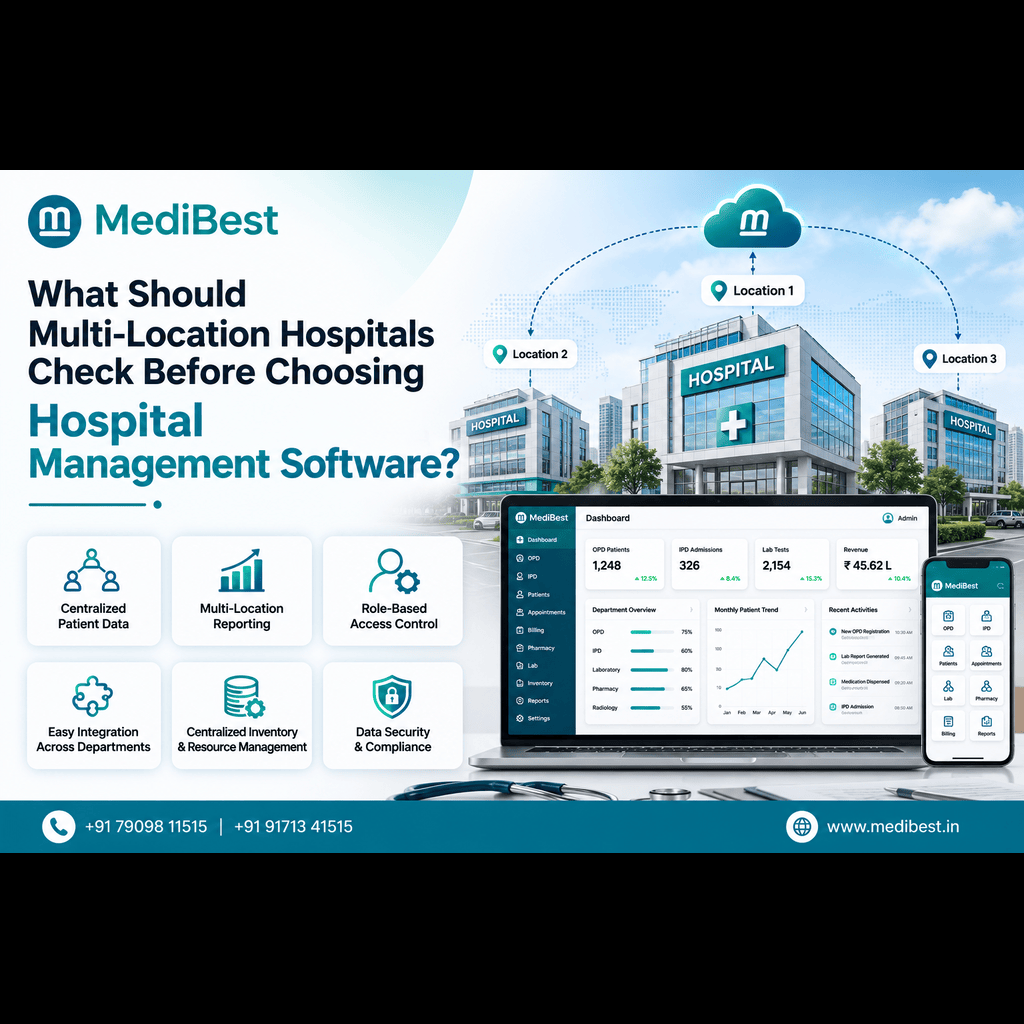
- Billing that sits inside the same healthcare management system as registration, pharmacy and lab, so nothing is entered twice
That last point matters most. When billing is a separate tool, someone has to copy data into it, and every copy is another chance to miss a charge.
A Simple Monthly Leakage Audit
You can start without any new tool. Once a month:
- Pick twenty recently discharged patients and compare what was ordered, issued and done with what was billed.
- Review the discount and concession report and look for repeat approvers or unusual patterns.
- List medicines issued to wards and check that each one appears on a patient bill.
- Sort outstanding insurance and credit bills by age, and give every old one an owner.
- Compare each day’s collections with the counter’s closing record for the same shift.
Write down what you find. Even one audit usually shows which of the seven leak points is hurting you most, and that tells you where to fix first.
Want to see a charge travel from the ward to the final bill without anyone retyping it? Watch it happen live, using your own tariff.
Choosing Hospital Billing Software in Indore
If you are comparing hospital billing software in Indore, test it with your own bills, not a sample. Ask the vendor to run one real patient journey, from registration to final bill, using your tariff, a package case and an insurance case. Then ask:
- Can you speak to hospitals in Indore or nearby that already use it?
- Who supports your team after go-live, and how quickly do they respond?
- How are new rates and packages added, and who does it?
Medibest is an Indore-based company, and its billing sits on the same platform as registration, IPD, pharmacy and lab, so charges flow into one bill without re-entry. Because the team is based in the same city, it is easier to arrange visits and training when you need them.
Frequently Asked Questions
1. What is revenue leakage in a hospital?
Revenue leakage is money a hospital earns by delivering care but does not collect. It includes services that were never billed, bills raised at the wrong rate, and bills that were never fully paid or followed up.
2. How does hospital billing software prevent revenue leakage?
It posts charges automatically from wards, lab and pharmacy, applies the correct tariff or package, asks for approval on discounts and tracks unpaid bills. That removes the manual steps where charges are usually missed.
3. Is billing software enough to stop leakage on its own?
No. Software enforces rules, but the hospital still has to set them: correct rates, approval levels and a regular audit. The best results come from combining both.
4. Which reports help find leakage early?
Start with a daily collection report, an unbilled services report, a discount and concession report, and payer-wise outstanding by age. Together they show missed charges, unusual discounts and slow payments.
5. How often should a hospital audit its billing?
A light audit every month works well for most hospitals. Review a small sample of discharged bills, check discounts and clear old outstanding amounts. Add a deeper review every quarter.
Conclusion
Revenue leakage is rarely a single failure. It is a series of small gaps between care and collection, and each one can be closed with a clear rule: bill as care happens, hold rates in one place, approve discounts, reconcile daily and audit monthly. The right billing software makes those rules automatic, so your team spends less time chasing money and more time on patients.
Stop chasing missed charges. Start billing everything you deliver.